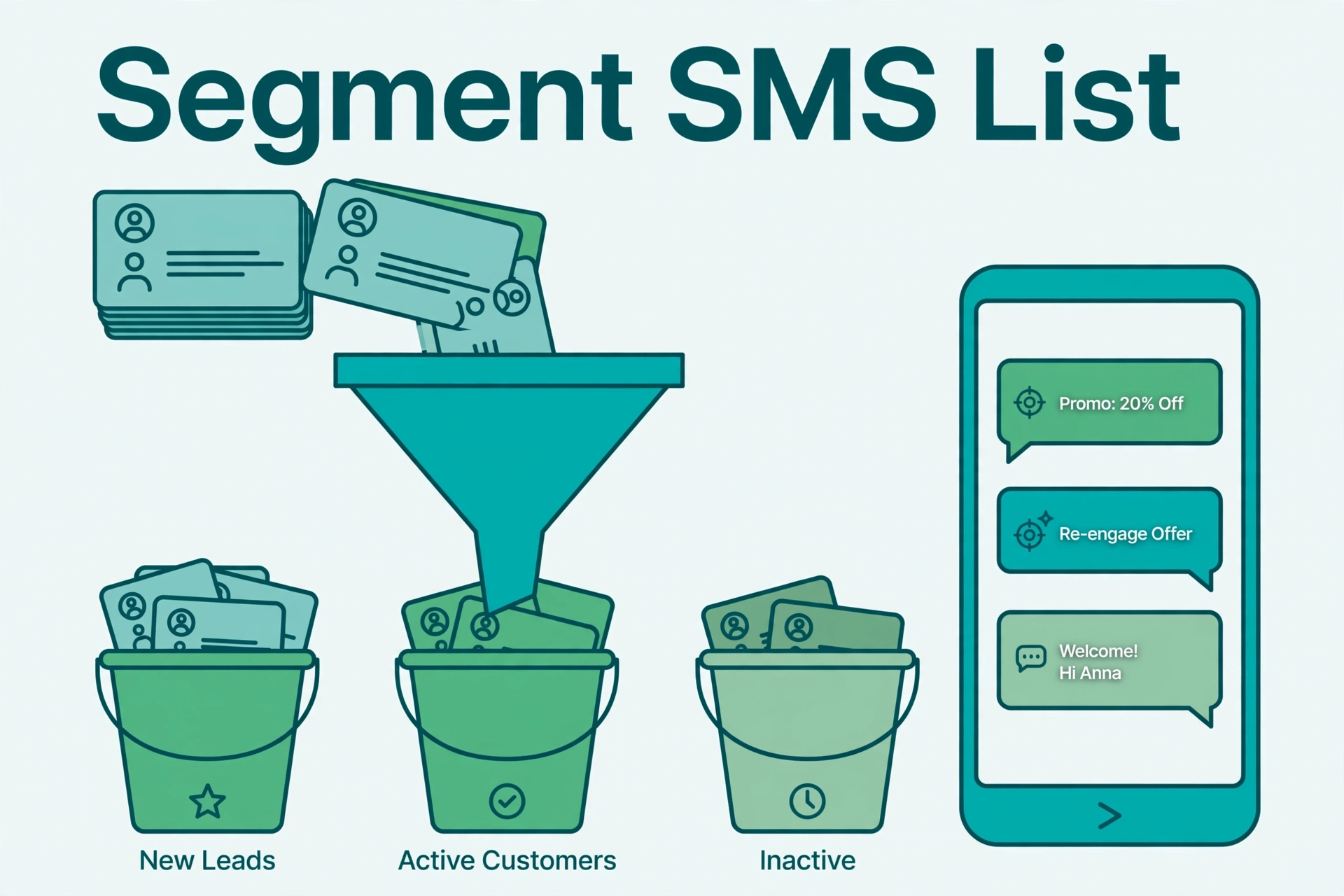
Sending the same text to your entire subscriber list is the SMS equivalent of shouting in a crowded room. Some people will hear something relevant. Most will tune you out, and a few will unsubscribe out of annoyance. Segmentation is the alternative: dividing your list into smaller groups and sending each group messages that actually fit them. It is one of the simplest ways to lift response rates while cutting opt-outs.
Why Segmentation Works
Relevance is the whole game in SMS. A text message is intimate. It lands on a screen the person checks dozens of times a day, right next to messages from friends and family. When the message is relevant, that intimacy works in your favor. When it is not, it feels intrusive in a way email never does.
Segmented campaigns consistently outperform blasts on the metrics that matter: higher response rates, higher conversion rates, and lower unsubscribe rates. They also cost less per result, because you stop paying to send messages to people who were never going to act on them.
Start with the Data You Already Have
You do not need a data science team to segment effectively. Start with what you already know about your subscribers.
Geography. Location is one of the most useful segments in SMS because timing and relevance are both location-dependent. Segmenting by state or time zone lets you respect quiet hours properly and send at sensible local times. It also lets you promote location-specific offers, events, or store information.
How they joined. Someone who opted in at checkout behaves differently from someone who texted a keyword from a billboard. Tag subscribers by signup source and tailor your early messages to match what they signed up for.
Purchase and engagement history. Past behavior predicts future behavior better than demographics do. Segment buyers from non-buyers, frequent purchasers from one-time purchasers, and engaged readers from people who never respond.
Recency. When someone last interacted with you is a powerful signal. Recent engagers are your best audience for new offers. People who went quiet months ago need re-engagement messaging, not your standard promotional calendar.
Behavioral Segments That Perform
Beyond the basics, these behavioral segments tend to earn their keep.
New subscribers. The first few messages set the tone for the whole relationship. A short welcome series that confirms what they signed up for, sets expectations about frequency, and delivers something useful early will keep more of them around than an immediate hard sell.
Active buyers. Your best customers deserve your best treatment: early access, loyalty offers, and messages that acknowledge the relationship. These are the people most likely to respond, so they are also the safest audience for testing new message formats.
Cart abandoners and warm leads. People who showed intent but did not convert are prime SMS targets. A timely, personal-feeling nudge often closes what email could not. Keep it helpful, not pushy.
Lapsed subscribers. Define lapsed on your own terms, often 60 to 90 days of no engagement, and run dedicated win-back campaigns. Acknowledge the silence, offer a reason to come back, and if they stay silent, consider suppressing them. Messaging people who never engage wastes money and risks complaints.
High-value segments. If you can identify your biggest spenders or most frequent buyers, treat them as a segment worth extra care: exclusive offers, human-feeling messages, and priority support. A small group can drive an outsized share of revenue.
Practical Segmentation Rules
A few principles keep segmentation useful instead of overwhelming.
Start with three to five segments. You can always add more. Ten micro-segments you cannot write distinct messages for are worse than four segments you can. Each segment should be large enough to matter and different enough to deserve its own messaging.
Every segment needs a reason to exist. If two segments would receive the same message, they are one segment. Merge them and move on.
Keep segments fresh. People change segments. A new subscriber becomes an active buyer, an active buyer goes quiet. Review and update your segments regularly, ideally automatically based on behavior triggers, so messages keep matching reality.
Respect consent boundaries per segment. Just because someone opted in for order updates does not mean they opted in for marketing blasts. Promotional messaging needs its own consent. This is general information, not legal advice, but the principle matters for both compliance and trust: message people about what they agreed to hear about.
Watch frequency per segment, not just overall. It is easy to stay under a global frequency cap while hammering one segment with overlapping campaigns. Track how many messages each segment receives and keep it reasonable.
Putting It into Practice
Here is a simple rollout plan if you are segmenting for the first time.
First, audit what data you actually have on each subscriber and clean it up. Segmentation built on bad data produces bad segments. Our campaign checklist covers the list-quality basics to handle first.
Second, pick your starter segments. Geography plus engagement level is a solid default: it gives you relevant timing and lets you treat your best audience differently from everyone else.
Third, write one campaign with segment-specific versions. Change more than the first name. Adjust the offer, the angle, and the call to action to fit each group.
Fourth, measure by segment. Track response and opt-out rates separately for each group. You will quickly see which segments deserve more attention and which messages miss.
Fifth, iterate. Double down on what works, fix or drop what does not, and add new segments only when you have messages worth sending to them.
Our free tools include utilities for campaign planning that pair well with a segmented sending strategy.
Frequently Asked Questions
How many segments should an SMS list have?
Start with three to five. Common starters are new subscribers, engaged customers, and lapsed contacts, optionally split by geography. Add more only when you can write genuinely different messages for each.
What is the best way to segment an SMS list?
Behavior beats demographics. How someone joined, what they bought, and when they last engaged predict response far better than age or location alone. Geography still matters for timing and local relevance.
Should I segment by demographics like age and gender?
Only if it changes what you would send. If the message would be identical anyway, demographic splits just add complexity. Segment on differences that drive different messaging.
How do I segment a purchased list with limited data?
Start with what you have, usually geography and any source information. Then build behavioral data fast: run an initial engagement campaign, watch who responds, and segment based on those responses. Your first campaign is also your first data collection.
Can segmentation reduce opt-outs?
Yes. Irrelevant messages are one of the top reasons people unsubscribe. When messages match the recipient’s interests and behavior, opt-out rates drop noticeably.