You register your brand, launch your first campaign, and hit send on 50,000 marketing texts. Then you watch the send crawl. Hours pass. The list is barely moving.
Nothing is broken. You are just bumping into your 10DLC throughput limit. Your messages per second (MPS) is set by two things: your trust score and your campaign type.
What 10DLC Throughput Means
Throughput is the number of message segments your campaign can send per second. It is measured in MPS (messages per second), and it counts segments, not whole messages. A 200-character text sent to the US usually arrives as two segments, so it uses two units of your MPS budget.
Throughput is a speed limit, not a volume allowance. It controls how fast you can push messages out in a burst. A separate set of limits, the daily caps, controls how many segments you can send per day. Both matter. A high MPS with a low daily cap means you blast through your quota in minutes and then sit idle.
How the Trust Score Works
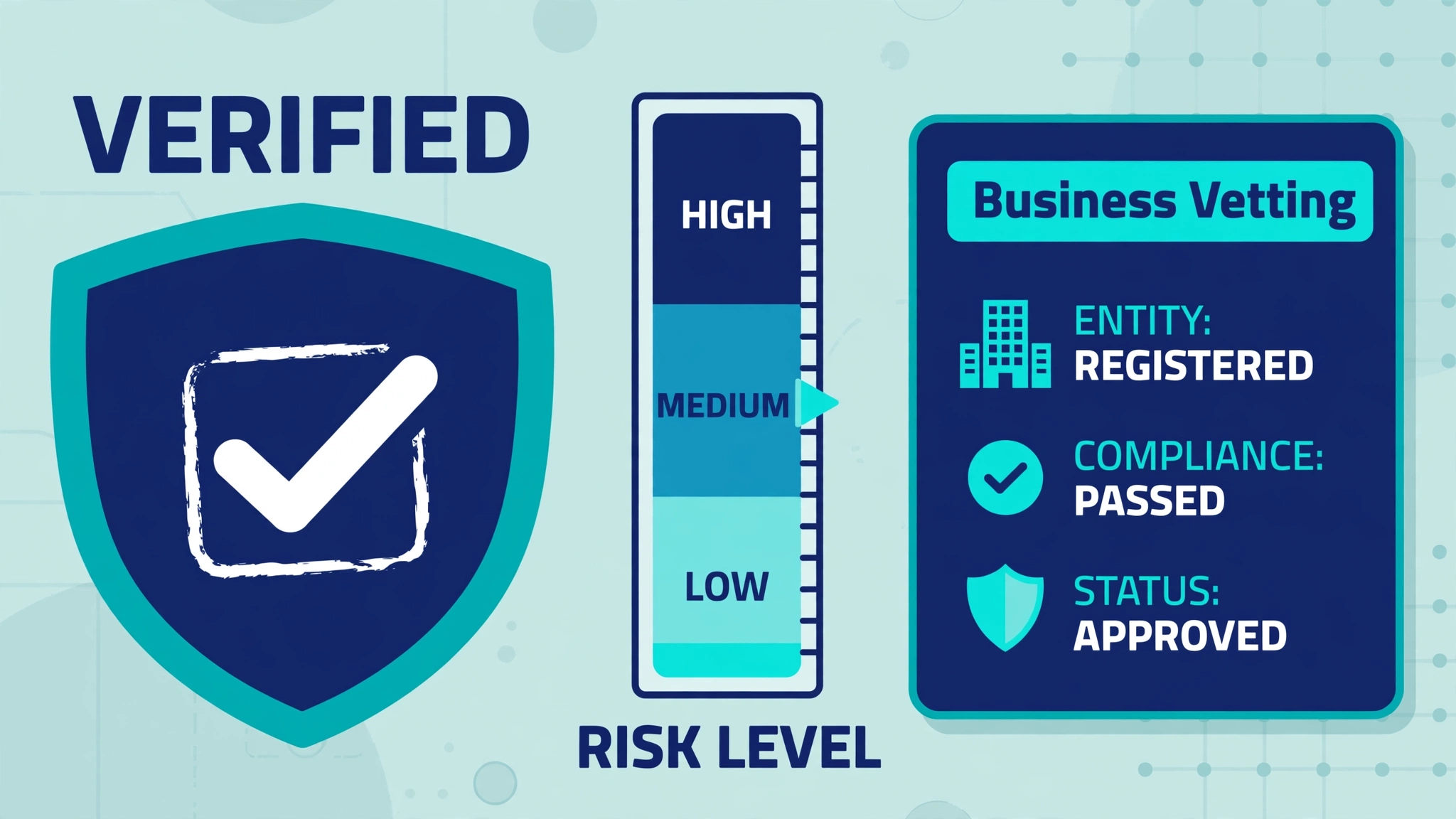
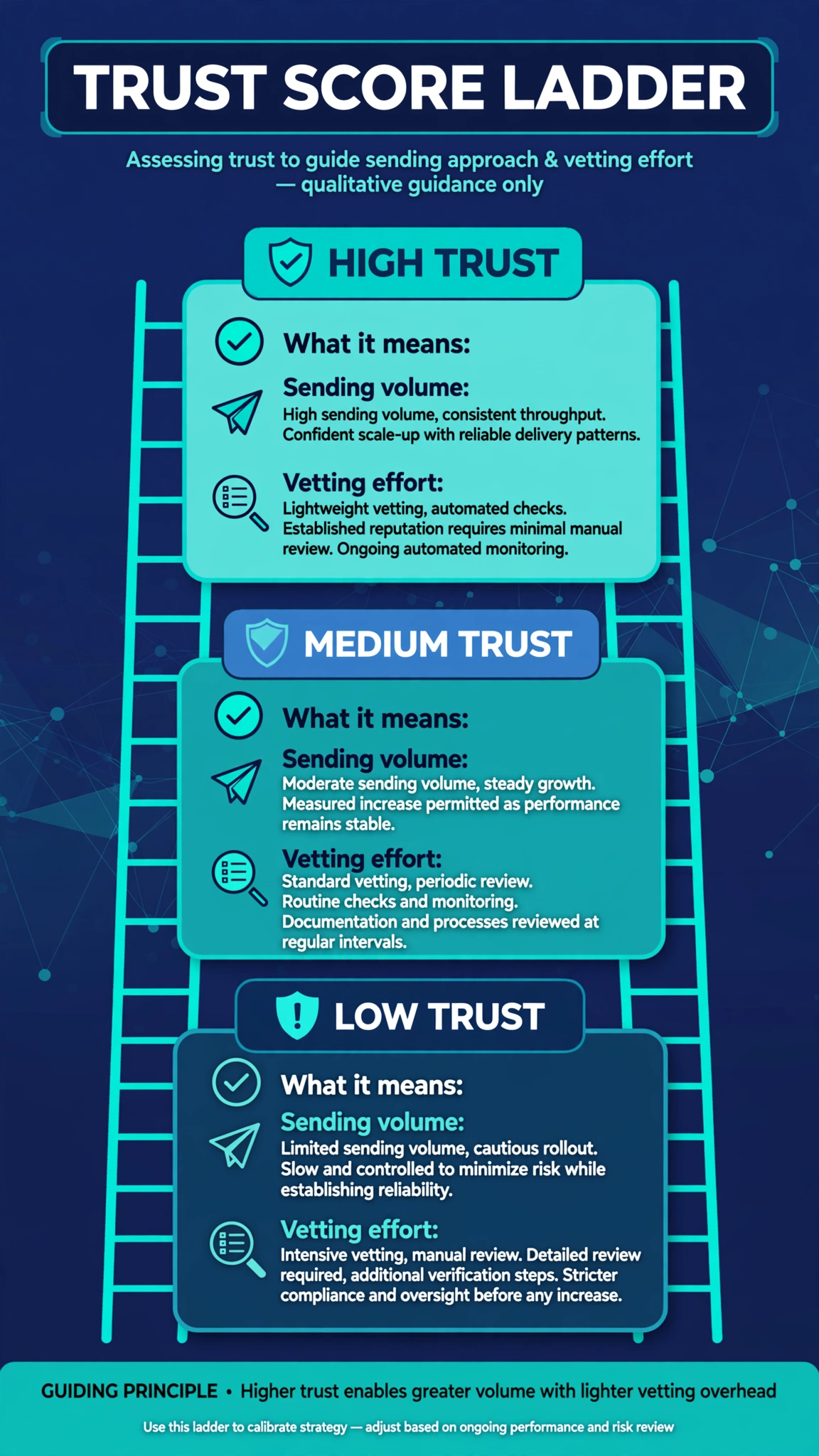
When you register a Standard brand with The Campaign Registry (TCR), a vetting partner runs your business details through a reputation algorithm. The result is a trust score from 0 to 100. That single number gets shared with the major US carriers, and it decides your throughput tier.
The trust score is based on your brand footprint: legal business name, EIN, business address, and how established your online presence looks. Larger, verifiable companies tend to score higher.
Three facts about the trust score are worth knowing up front. Sole Proprietor and Low Volume brands never get a trust score. They skip secondary vetting entirely, and their limits are set by fixed brand-type rules instead. Trust scores are static. They do not drift upward as you build sending history, and they do not adjust automatically over time. If your score is too low for your needs, the only fix is a new vetting request. And without the optional secondary vetting, the maximum trust score a Standard brand can receive is 49. That detail matters more than almost anything else in this article.
The MPS Tiers: Realistic Numbers by Trust Score
For standard campaign use cases (2FA, customer care, delivery notifications, marketing, and similar declared single use cases), the major carriers apply the same three tiers. The total MPS is split across AT&T, T-Mobile, and Verizon, so your per-carrier rate is roughly one third of the total.
| Trust Score | Total SMS MPS (AT&T, T-Mobile, Verizon) | Per-Carrier SMS MPS | T-Mobile Daily Cap |
|---|---|---|---|
| 75-100 | 225 | 75 | 200,000 segments/day |
| 50-74 | 120 | 40 | 40,000 segments/day |
| 1-49 | 12 | 4 | 2,000 to 10,000 segments/day |
A few notes on that table. The T-Mobile daily cap is applied at the brand level, and it is further banded inside the lower tiers: scores of 25-49 get 10,000 per day while scores of 1-24 get only 2,000 per day. The MPS tiers shown here come from current Twilio, Aircall, LeadConnector, Salesmate, and Salesmsg documentation, and all five sources agree on the structure. MMS throughput sits on a separate, lower scale, roughly 40 MPS per carrier at the top tier and 5 at the bottom.
What does this mean in practice? At 225 MPS you can push out about 13,500 single-segment messages in one minute. A 50,000-message promotional blast takes under four minutes of raw sending time. At 12 MPS, that same blast takes just under 70 minutes. At the bottom tier, timing your sends around quiet hours and campaign windows becomes a genuine scheduling problem, not a footnote.
Campaign Type Changes the Math Too
Your use case matters alongside your score. The tiers above apply to standard campaign use cases. Two exceptions are worth knowing.
Low Volume Mixed is a separate campaign designation with a lower monthly fee, but it is fixed at 3.75 total MPS (about 1.25 per major carrier) no matter what your trust score is. If you pick this campaign type, vetting will not speed you up.
Mixed and marketing use cases can have slightly different low-end banding in some providers’ docs, but the top two tiers stay the same either way.
Secondary Vetting: The Uplift Path
Here is the mechanics of the upgrade. A Standard brand that skips the paid secondary vetting is capped at a trust score of 49, which lands you in the 12 MPS tier with the lower T-Mobile daily cap. Secondary vetting is a paid, one-time review (currently $40 per brand, requested through your messaging provider or CSP) that produces your full 0-100 trust score.
That single step is the difference between 12 MPS and 225 MPS. Going from the bottom tier to the top is an 18x jump in speed, plus the jump from 10,000 to 200,000 messages per day on T-Mobile. For any business sending real marketing volume, secondary vetting is the highest-value $40 in the whole 10DLC process.
If your score still comes back low after secondary vetting, you can appeal with corrected information. The biggest lever is accuracy. The most common cause of a low score is a mismatch between your TCR registration and your official tax documentation, such as an EIN paired with a legal name or address that does not match exactly. Line up your IRS paperwork with your submission character for character before you resubmit.
Brand Types Compared
It helps to see the full landscape. Your brand type sets the frame that your trust score and campaign type fill in.
| Brand Type | Trust Score | SMS MPS | T-Mobile Daily Cap | Best For |
|---|---|---|---|---|
| Standard (vetted) | 0-100 | 12-225 | 2,000-200,000 | Businesses sending real volume |
| Standard (no secondary vetting) | Capped at 49 | 12 | Up to 10,000 | Testing before committing |
| Low Volume Standard | None (fixed) | 12 | 2,000 | Under ~6,000 messages/day total |
| Sole Proprietor | None (fixed) | ~1 | 1,000 | Individuals, very light use |
| Low Volume Mixed campaign | Score ignored | 3.75 | Low | Cheap, tiny sends |
If you outgrow the Low Volume or Sole Proprietor limits, note that upgrading is not an edit to your existing registration. You move to a new brand and campaign registration, which is a separate setup, not a settings change.
Daily Caps vs Per-Second Speed
People mix these up constantly, so let us separate them clearly.
MPS is your speed. It is set per campaign and split across the three major carriers.
The daily cap is your volume. T-Mobile enforces it at the brand level, resetting at midnight Pacific. AT&T and Verizon do not publish the same kind of public daily cap structure, but they apply their own rate handling on their networks. For minor carriers, throughput is capped much lower, typically around 1 MPS per phone number.
Two planning mistakes follow from ignoring the daily cap. The first is assuming a high MPS means unlimited sends. A 225 MPS campaign still stops at the T-Mobile brand daily cap. The second is segment math. A campaign of 40,000 two-segment messages is 80,000 segments against your cap, not 40,000. Always budget in segments.
What Happens Without Registration
This section exists because the old advice is still floating around. It used to be said that unregistered long codes just sent slowly, at about 1 MPS, with heavier filtering. That is no longer how it works.
Since August 2023, unregistered A2P traffic to US numbers is blocked outright. Twilio returns error 30034, “Message from an Unregistered Number,” and the messages do not go through. There is no slow lane anymore. You are either registered or you are not sending.
Practical Tips for Planning Your Sends
Adding more phone numbers to a campaign does not raise the throughput ceiling. The MPS limit belongs to the campaign, not to the numbers in it. You can spread sends across campaigns if your use cases justify separate registrations, but you cannot multiply your speed by adding numbers to one campaign.
Schedule big blasts with your MPS in mind. At 12 MPS, a 100,000-message send takes over two hours of continuous sending. Queue it early, and check it against your quiet hours obligations for the states you are texting into.
Watch MMS separately. MMS throughput is lower than SMS throughput at every tier, so image-heavy campaigns can hit the MMS ceiling long before the SMS one.
FAQ
What is a 10DLC trust score?
It is a 0-100 score assigned during Standard brand registration with The Campaign Registry. A vetting partner scores your business based on your registration details and brand footprint, and the major US carriers use that score to set your throughput tier and daily limits.
How do I increase my 10DLC throughput?
The main lever is secondary vetting. Without it, a Standard brand caps out at a trust score of 49 and 12 MPS. With it, you can reach the 75-100 band at 225 MPS. Make sure your business details exactly match your tax documentation before requesting vetting, since mismatches are the most common cause of low scores.
How long does 10DLC registration and approval take?
Typical timelines run 3 to 5 business days, though some providers report up to 4 or 5 weeks in slower cases. Campaign use cases cannot be changed after approval, and resubmission costs another fee, so get the use case right the first time.
Do I need a separate 10DLC campaign for each marketing campaign I run?
No. A 10DLC campaign represents your reason for texting, such as marketing or customer care, not a specific promotion or drip sequence. Most businesses need one campaign per use case.
Does 10DLC apply to short codes or toll-free numbers?
No. 10DLC covers 10-digit long codes. Toll-free numbers go through a separate verification process, and short codes require individual carrier approval and vetting, which typically takes weeks longer.
Can I send SMS without 10DLC brand vetting?
Not for application-to-person traffic to US numbers. Unregistered A2P long code traffic is blocked by the carriers. Sole Proprietor brands are the light exception, since they register with a simpler process and skip secondary vetting, but they carry the lowest limits.
What happens if my brand gets a low trust score?
You land in a lower throughput tier with lower daily caps. You can appeal or re-request secondary vetting with corrected business details. You can appeal with corrected business details, though appeal fees and windows vary by provider, so check the current process before you file.
Does adding more phone numbers increase my 10DLC throughput?
No. Throughput is allocated per campaign based on brand type, campaign type, and trust score. More numbers in the same campaign share the same ceiling.
Conclusion
10DLC throughput is not mysterious once you see the mechanics. Your trust score picks your tier, your campaign type can modify it, and secondary vetting is the bridge from the 12 MPS tier to the 225 MPS tier. Know your tier, budget in segments, respect the daily caps, and stay registered. Verify the current figures with your provider before any large send, since carrier rules change over time.
This article is for general information only and is not legal advice. 10DLC rules, fees, and carrier throughput policies change over time. Verify current requirements with The Campaign Registry, your messaging provider, and the carriers before registering or sending.
Want this set up for you?
I build SMS chatbots and API integrations for businesses. If you would like what this guide describes, done for you, get in touch.